By Jan Glozier
Diabetes care has come a long way in the past 50 years, and that can be seen through the many changes in diabetes protocols that have happened throughout the years at Camp Huronda.
As a camp counsellor, a camp nurse, and later a diabetes educator and chair of the Friends of Camp Huronda alumni group, I thought it would be interesting to chronicle where we started from – and how far we have come!
Early years:
TESTING:
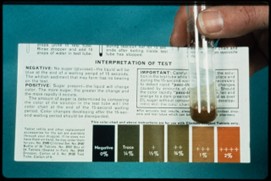
Urine testing was done three times a day. We peed into paper cups and used droppers to put the urine into test tubes before adding a Clinitest tablet that would turn the urine anywhere from blue to green to orange. It would then be compared to a colour chart and recorded in a little book each counsellor kept for their cabin group. Blue meant no sugar was detected in the urine, and orange meant the need to test for ketones using an Acetest tablet.
Whistles were blown for “First Void” mid-afternoon and also part-way through evening program. Everyone had to pee, so that when they tested their urine a little bit later, it was not a reflection of glucose levels from all morning or afternoon.
Of course, as with all things at Camp Huronda, urine testing found its way into songs (2 drops, 10 drops, drop in the tablet, 2 drops, 10 drops, drop in the pee), and absolutely epic “First Void” skits at Camp Show!
INSULIN:
One injection per day was the most common insulin regimen, with only a handful of campers coming to the Insul-Inn for a suppertime dose.
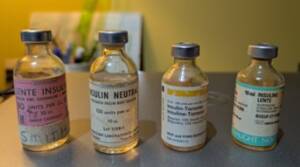
Insulin was drawn up with a syringe from vials of Lente or NPH and sometimes mixed with fast-acting insulin like Novolin Toronto or Humulin R.
 Harfoots were the first to wake, test and have their insulin about an hour before breakfast. However, that was okay, because the insulin did not even start to work for that long. Yes, even the “fast” insulin took that long to get going! Everyone also got their morning “fruit exchange” as a glass of juice when they took their insulin.
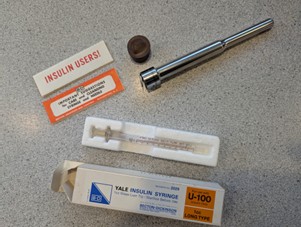
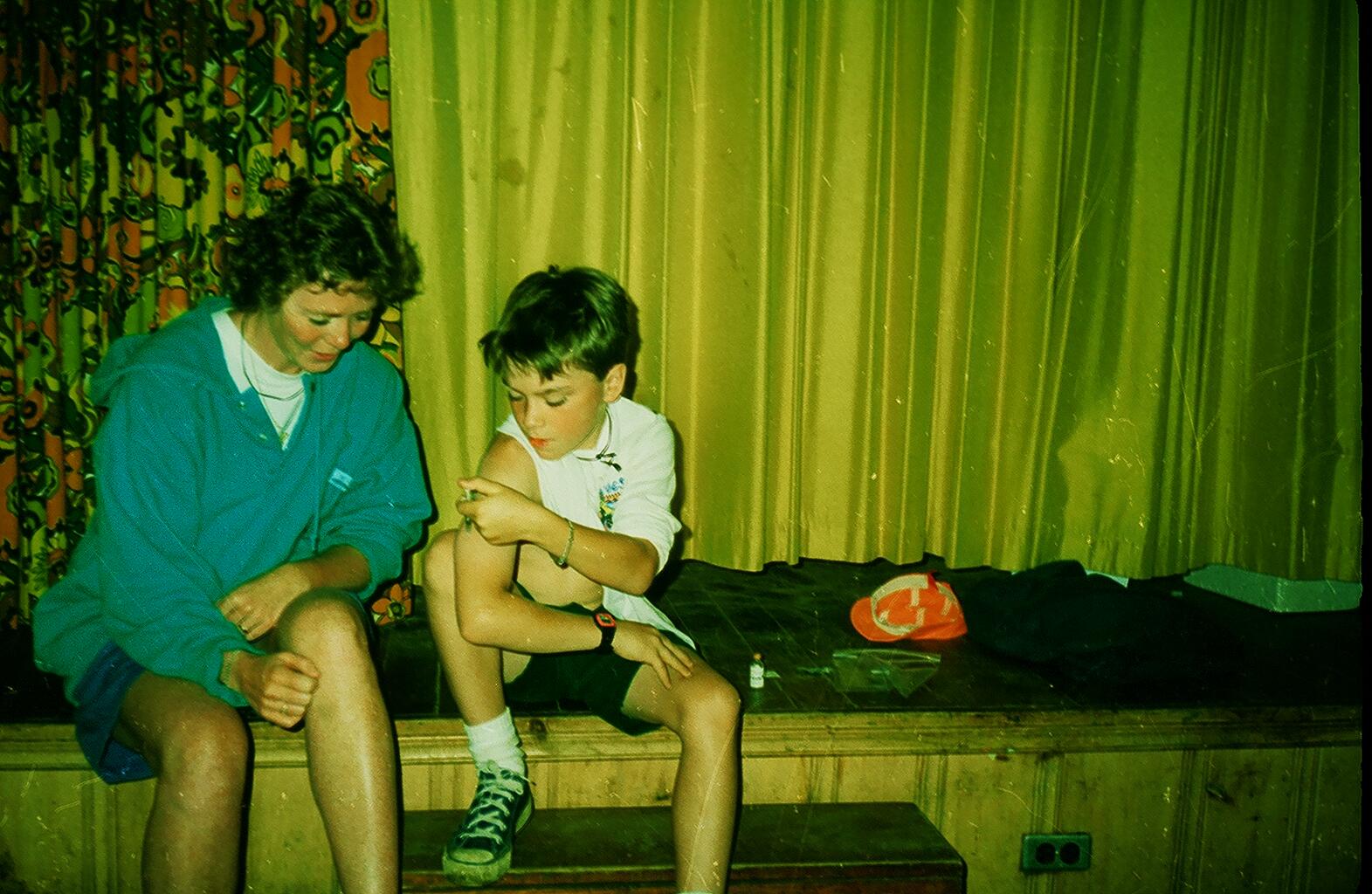
For the first twenty-five years at camp, the boys would see the doctor in the rec hall to determine their insulin dose (based on their urine test results for the past day), and the girls would be on the stage. It took about 1 ½ hours to have every camper seen by the doctors and have their injection. There was one doctor for the girls, and one doctor for the boys, backed up by three or four nurses to support all 85 campers for two weeks.
LOW BLOOD SUGAR:
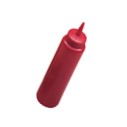
Corn syrup in condiment squeeze-bottles was the low blood sugar treatment of choice. Corn syrup bottles could be found everywhere – at the waterfront, in each camper cabin (but in the counsellor’s quarters so as not to tempt campers who just liked the sweet taste). The staff on patrols also carried it, as did the counsellor who was assigned as “Night Nurse” for a two-week period. It was definitely not an exact science, as staff members would take a corn syrup bottle and squirt a blob into the mouths of any camper was feeling low! If they were in reasonable proximity of the Insul-Inn, they would go there and receive juice and cookies.
New Technology:
BLOOD TESTS
- Visually-read blood glucose testing with Chemstrip BG.
- Blood glucose meters arrived on scene.
- At first they were only in the Insul-Inn, but eventually they were located in each cabin, making blood testing quick and easy for the whole camp.
NEW INSULINS
With the development of rapid insulins like NovoRapid and Humalog, in the late 1990’s, meals needed to be started soon after taking a mealtime insulin dose. This was accomplished by the creation of the Humalodge under the dining hall.
Campers and staff would enter the dining hall, and cabin groups would see the medical staff in the Humalodge, have their insulin, and then go back up to the dining hall to start their meal.
By this time, the medical staff had grown significantly, with more doctors and more nurses part of the medical camp team.
MORE RECENTLY….
- Syringes and vials were replaced by Insulin Pens .
- Insulin Pens are being replaced by Insulin Pumps.
- Blood glucose testing is being replaced by Continuous Glucose Sensors.
- The original Insul-Inn itself was recently replaced by a new, larger Insul-Inn, thanks to a significant donation.
Timeline of insulin and devices:
- Glass syringes requiring sterilization and metal needle tips that required weekly sharpening.
- Lente and NPH were the slow insulins. Regular insulin was the short-acting insulin
- Insulin derived from animal sources stored in vials.
- Disposable needle tips for glass syringes.
- Disposable syringes.
1978 – Synthetic, or “human” insulin developed.
1985 – Insulin pens with cartridges developed.
1992 – Insulin pumps.
1996 – Rapid-acting insulin developed.
2017 – Longer-acting slow insulin (Degludec).